
It Takes Two vs Split Fiction: Which Should You Play?
It Takes Two vs Split Fiction: compare co-op mechanics, story, pacing, and side activities to choose the right adventure for you and your gaming partner.
Jump to
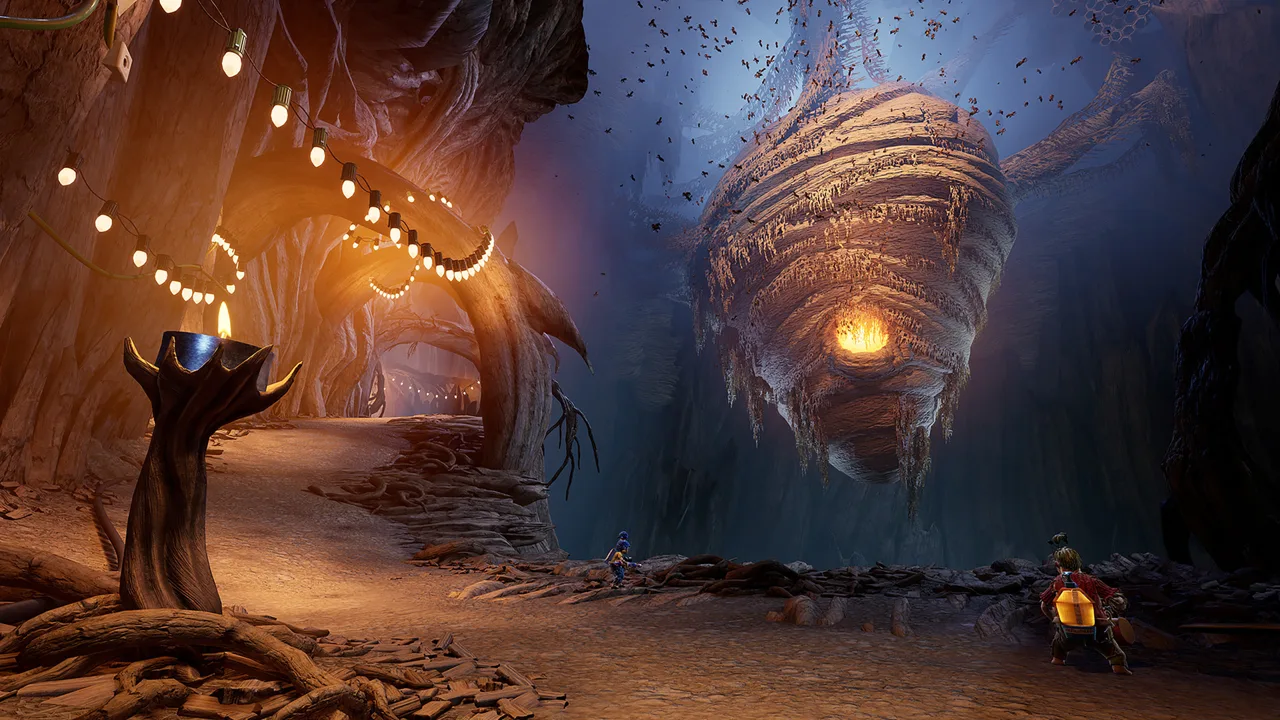
It Takes Two vs Split Fiction: Which Should You Play First?
Your next co-op adventure should suit both people holding the controllers. It Takes Two vs Split Fiction comes down to whether you want playful exploration with room to breathe or a faster ride through science fiction and fantasy. Start with It Takes Two for a more approachable introduction to cooperative platforming; choose Split Fiction for frequent action sequences, dramatic encounters, and a steady stream of new mechanics.
Both games come from Hazelight Studios, and both make cooperation central to the adventure. Your partner gets abilities that complement yours, so progress involves communicating, coordinating, and figuring out how your tools fit together.
The distinction becomes clearer between the big moments. It Takes Two gives you more opportunities to investigate an environment, challenge each other to a minigame, or simply enjoy the scenery. Split Fiction keeps pushing toward the next transformation, chase, or showdown.
| Comparison | It Takes Two | Split Fiction |
|---|---|---|
| Main characters | Cody and May, a married couple facing divorce | Mio and Zoe, writers with contrasting personalities |
| Setting | Familiar household spaces transformed into oversized adventures | Simulated worlds drawn from science fiction and fantasy |
| Gameplay rhythm | Puzzles, exploration, minigames, and action | Frequent action sequences and rapid mechanical changes |
| Optional activities | Small competitive minigames | More substantial side stories |
| Learning curve | More gradual early introduction | Faster demands to adapt to changing situations |
For a duo with different experience levels, It Takes Two has the clearer starting advantage. For partners already comfortable with action games, Split Fiction’s momentum becomes a stronger selling point.
Co-Op Mechanics: Complementary Tools or Constant Reinvention?
The most useful It Takes Two vs Split Fiction comparison starts with what each person actually does. Both games use asymmetrical co-op: you share an objective while handling different abilities.
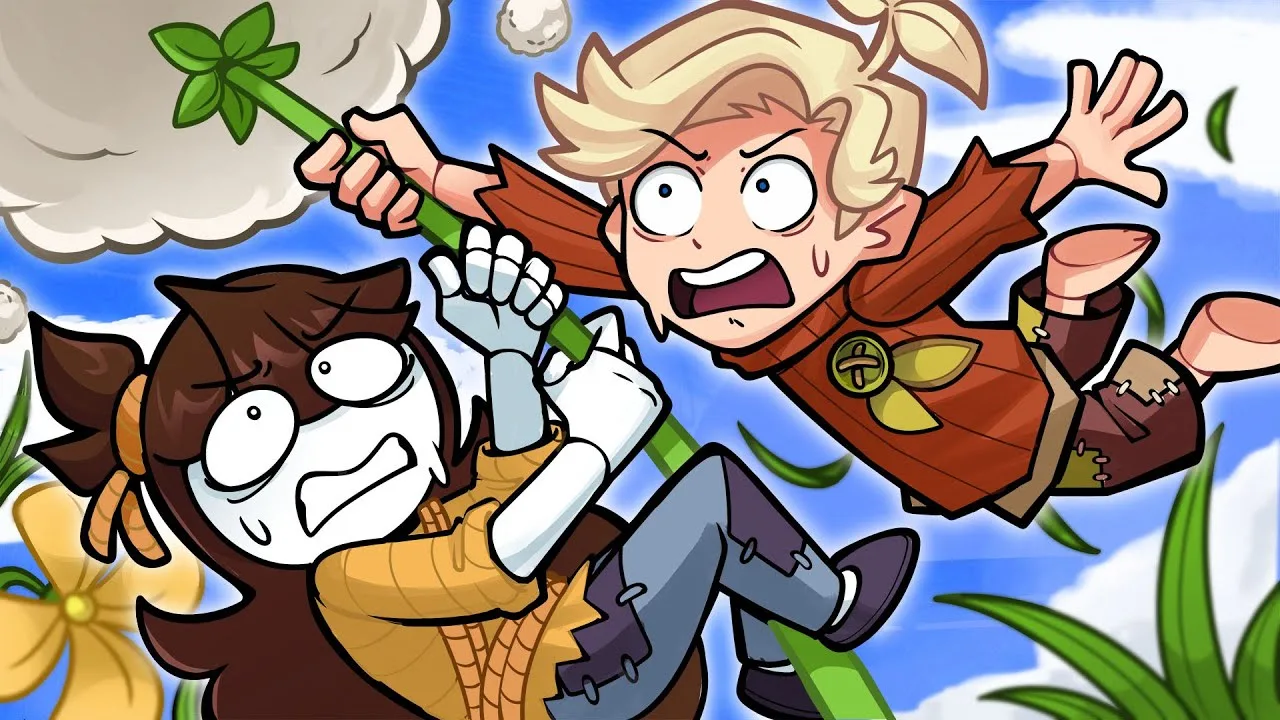
That structure gives communication a practical purpose. You need to explain what your tool can do, watch your partner’s position, and coordinate actions rather than simply race toward the same destination.
How It Takes Two develops its ideas
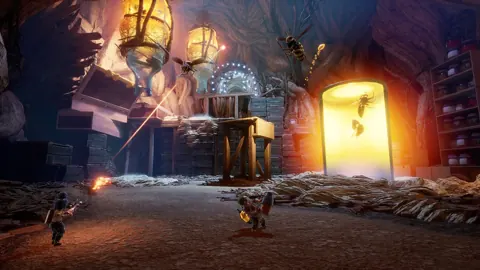
It Takes Two introduces abilities tied closely to each environment. Early on, Cody throws nails while May carries a hammer. Their tools belong naturally in the workshop setting, and the challenges build around their different functions.
That connection helps each area feel coherent. You learn a mechanic, encounter new uses for it, and bring those lessons into more demanding situations. The game changes genres and abilities throughout the adventure, but individual sections give their ideas room to develop.
Its cooperative design also fits the relationship story. Cody and May need to work together even while arguing, and the gameplay repeatedly makes that dependence tangible.
How Split Fiction changes the challenge
Split Fiction uses its writers’ imaginations to move between sharply different play styles. Mio’s science-fiction settings bring weapons and futuristic equipment, while Zoe’s fantasy worlds introduce transformations and dragon riding.
The appeal is anticipation: a new environment can bring a substantially different way to move, fight, or cooperate. That variety also asks both players to adjust quickly.
| Mechanical element | It Takes Two | Split Fiction |
|---|---|---|
| Ability design | Distinct tools connected to each level’s theme | Abilities shaped by futuristic and fantasy settings |
| Examples | Cody’s nails and May’s hammer | Cyber ninja weapons, creature transformations, and dragons |
| Development within levels | Mechanics expand through successive challenges | Frequent changes introduce different play styles |
| Boss encounters | Cooperative use of complementary abilities | Cinematic encounters with varied mechanics |
| Partner involvement | Strong emphasis on mutual dependence | Cooperative challenges alongside sections with uneven demands |
Explain your ability before tackling a new puzzle. A short “I can affect this object—what can you do?” conversation helps both players participate in the solution.
Discuss which abilities look enjoyable to each of you. Different powers do not automatically feel equally exciting, especially when one character gets a more immediately spectacular role.
Pacing, Worlds, and Side Activities
Pacing is where the It Takes Two vs Split Fiction decision becomes especially personal. A game can offer excellent individual sequences and still feel exhausting if its rhythm clashes with how you like to play together.
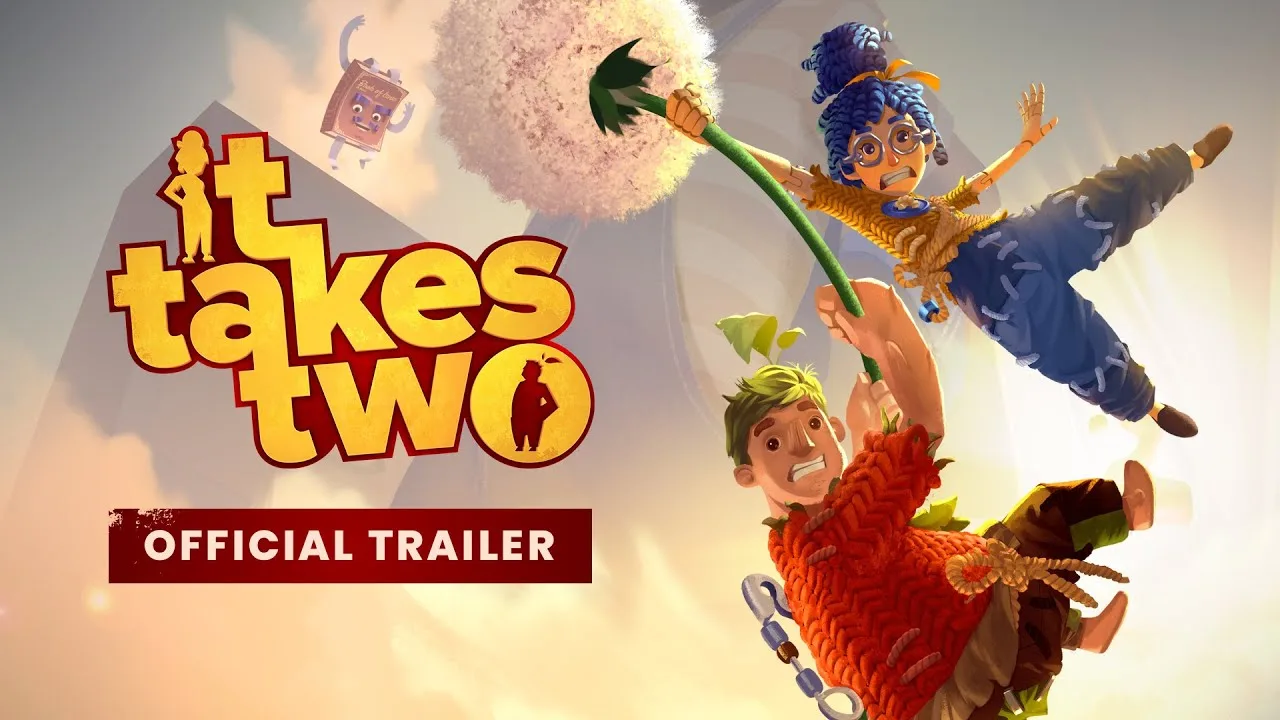
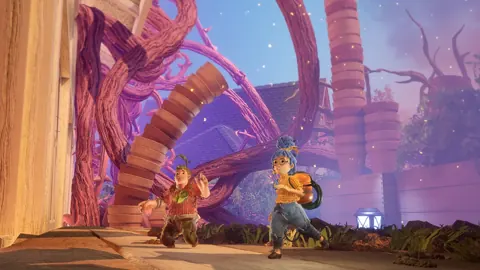
It Takes Two turns ordinary spaces into places worth examining. A shed becomes an obstacle course, a garden expands into a strange wilderness, and household objects take on new significance at doll scale.
That familiar foundation makes exploration satisfying. Recognizing an everyday object from an unfamiliar perspective becomes part of the entertainment, even before it turns into a puzzle.
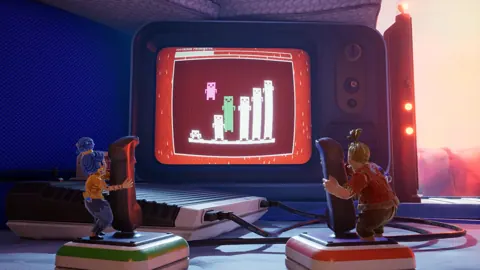
Competitive minigames provide another reason to slow down. Activities such as chess, skating races, and target challenges let you briefly switch from helping your partner to trying to beat them.
Split Fiction takes a broader visual approach. Futuristic cities and fantasy environments create dramatic contrasts, with chase sequences and major encounters keeping the journey moving. Its sharper visual detail strengthens that sense of spectacle.
Its optional side stories offer more developed detours than a quick minigame. These include unusual scenarios involving pigs, a birthday cake, and snowboarding.
| Activity or setting | What you get | Effect on the session |
|---|---|---|
| It Takes Two’s household environments | Recognizable objects rebuilt at miniature scale | Encourages curiosity about the surroundings |
| It Takes Two’s competitive minigames | Brief contests between partners | Breaks up cooperative progression |
| Split Fiction’s main worlds | Alternating futuristic and fantasy adventures | Creates strong changes in scenery and abilities |
| Split Fiction’s side stories | Distinct scenarios with their own gameplay ideas | Adds variety beyond the main journey |
The difference is scale and purpose. A larger side story offers another adventure to experience together. A small competitive activity offers somewhere to linger, repeat a contest, and enjoy the rivalry.
Look around new areas in It Takes Two before moving on. Discovering optional activities is part of its appeal.
Take breaks between Split Fiction chapters if the action starts feeling tiring. Its frequent chases and confrontations can make even an enjoyable session feel demanding.
Story and Characters: Relationship Repair or an Unlikely Friendship?
Story complicates the It Takes Two vs Split Fiction debate because their emotional foundations are so different.
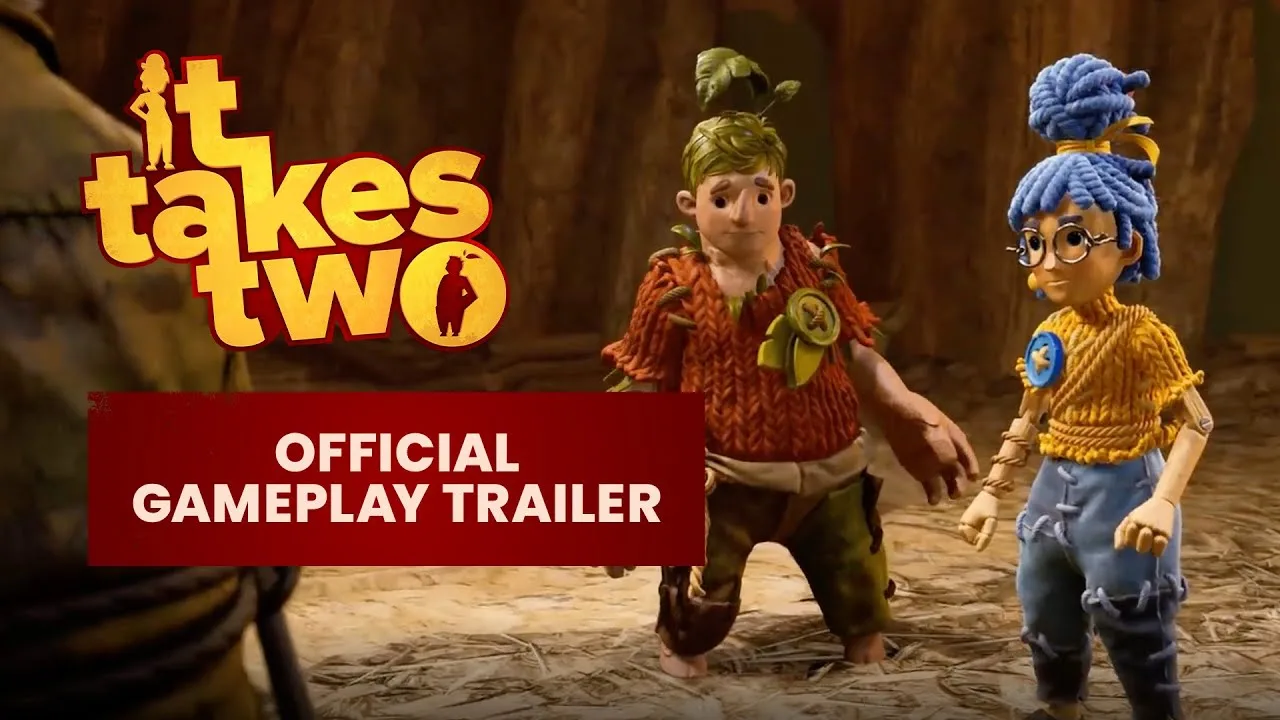
It Takes Two introduces Cody and May at a breaking point in their marriage. After becoming dolls, they must navigate a fantastical adventure while their daughter, Rose, remains central to the emotional stakes.
Their shared history gives their arguments immediate context. Complaints about chores, responsibilities, and neglected ambitions connect the larger relationship conflict to recognizable everyday frustrations.
Dr. Hakim, the animated relationship book, adds an exaggerated comic presence. His enthusiasm can be entertaining or irritating depending on your tolerance for a loud character determined to teach a lesson.
The writing also mixes sincere moments with broad jokes and occasional dark humor. The colorful presentation comes with themes of divorce, family tension, and some uncomfortable scenes.
Split Fiction follows Mio and Zoe, two unpublished writers trapped inside a simulation built from their fictional worlds. Mio favors science fiction, while Zoe writes fantasy, and their contrasting personalities shape their early interactions.
Their relationship develops from unfamiliarity into connection as they work through each other’s creations. That premise gives the adventure a different emotional focus: learning to understand someone whose outlook initially clashes with your own.
Whether that connection works for you depends partly on how you respond to their early friction. Their contrasting attitudes establish a clear dynamic, though the repeated disagreements can become wearing.
| Story element | It Takes Two | Split Fiction |
|---|---|---|
| Starting relationship | Married partners with an established history | Strangers brought together through a shared predicament |
| Central conflict | A fractured marriage and its effect on a family | Escaping a simulation that exploits writers’ ideas |
| Emotional focus | Responsibility, communication, and reconciliation | Trust, creativity, and developing friendship |
| Comic style | Domestic bickering and exaggerated fantasy characters | Contrasting personalities and absurd fictional scenarios |
Choose the premise you both want to spend time with. Relationship repair gives It Takes Two a more personal starting point, while Split Fiction lets its protagonists discover each other through imaginative worlds.
Friend’s Pass, Replay Value, and Your Final Choice
Practical considerations matter in It Takes Two vs Split Fiction, especially when you are arranging online sessions. Both games offer Friend’s Pass, allowing one owner to invite a partner who downloads the appropriate free client.
For It Takes Two, the full adventure requires one player to own the game, and online Friend’s Pass play requires a partner on the same platform. The pass also requires installation and the applicable platform account. Its official game website provides access to the game and Friend’s Pass information.
Check platform compatibility together before buying. Friend’s Pass handles access for the invited player; compatibility still matters when choosing how to connect.
It Takes Two supports couch co-op and online split-screen play. Its Steam page also offers the PC version and identifies Remote Play Together support.
Replay value comes from somewhat different pleasures. In It Takes Two, changing characters lets you experience the complementary abilities from the other side. Competitive minigames, secrets, and achievements add reasons to revisit familiar spaces.
Split Fiction’s appeal on a return trip centers on revisiting its worlds, encounters, and optional side stories. Its variety makes particular sequences worth experiencing again, especially with another partner.
Switch characters on a return playthrough of It Takes Two. Handling the other set of tools changes your contribution to puzzles you already understand.
For the final It Takes Two vs Split Fiction choice, match the game to your shared priorities:
- Start with It Takes Two for gradual onboarding, cooperative puzzles, playful exploration, and frequent opportunities to slow down.
- Choose Split Fiction for science-fiction and fantasy settings, cinematic boss encounters, and fast changes in gameplay.
- Play both if discovering new cooperative mechanics is the main attraction.
It Takes Two earns the overall recommendation through its balance of teamwork, exploration, and pacing. Split Fiction offers a compelling next adventure for partners eager to trade that gentler rhythm for more sustained spectacle.
FAQ
Which is better for beginners: It Takes Two or Split Fiction?
It Takes Two is the more approachable starting point. Its early mechanics arrive more gradually, and exploration and minigames provide breaks between demanding sequences. Both players still need to participate in platforming and cooperative challenges.
Do both games have Friend’s Pass?
Yes. Both offer Friend’s Pass so an owner can invite a partner using the free client. For It Takes Two, online Friend’s Pass requires players on the same platform, installation of the pass, and the applicable platform account.
Is Split Fiction a sequel to It Takes Two?
Split Fiction follows different protagonists in a different setting. It shares Hazelight Studios’ focus on cooperation and complementary abilities, while its story centers on Mio, Zoe, and their fictional worlds.
Who wins the It Takes Two vs Split Fiction comparison?
It Takes Two has the stronger overall balance for an approachable co-op adventure, particularly if you enjoy exploration and competitive minigames. Split Fiction is the stronger fit for a duo drawn to rapid action, cinematic encounters, and alternating science-fiction and fantasy worlds.
Continue with
 It Takes Two Walkthrough: Shed Puzzles and Boss GuideFollow It Takes Two walkthrough to solve the Shed's co-op puzzles, master Cody and May's tools, and defeat the Vacuum Tower and Toolbox with your partner.
More in Guide
It Takes Two Age Rating: What Parents Need to Know
Understand the It Takes Two age rating, language, fantasy violence, and emotional themes before choosing this co-op adventure for your family game night.
It Takes Two How Long to Beat? Story and Co-Op Times
It Takes Two how long does it take to beat? Explore story length, co-op playtime, completion estimates, and tips for planning the adventure with a partner.
It Takes Two Sequel Guide: Split Fiction Explained
Looking for an It Takes Two sequel? Explore Split Fiction, its release dates, platforms, crossplay, and Friend’s Pass before your next co-op game night.
It Takes Two Similar Games: 12 Co-Op Picks to Play
Explore It Takes Two similar games for smart puzzles, emotional stories, and couch co-op chaos. Find your next adventure to share with a friend or partner.
Join the community
Official channels for news, updates and player help: