It Takes Two Abilities: Cody and May's Powers Explained
Explore It Takes Two abilities for Cody and May, from sap guns and magnets to time control. Learn how their powers work together to solve co-op challenges.
Jump to
How Do It Takes Two Abilities Work?
It Takes Two abilities turn ordinary household objects into reasons to coordinate with your partner. Cody and May receive different tools throughout their adventure, so understanding both sides of a puzzle matters as much as handling your own character. Learning how It Takes Two abilities connect helps you recognize when to shoot, move, manipulate an object, or let your partner take over.
You play as Cody or May, parents transformed into dolls and drawn into a fantastical adventure guided by Dr. Hakim. Their changing powers connect directly to the relationship problems they face: magnets explore attraction, while time manipulation and cloning turn an argument about availability into a playable challenge.
The essential idea is cooperation. A tool that looks useful for combat can also change the environment, and a movement challenge can depend on something happening on your partner’s screen.
| Mechanic | Cody’s role | May’s role |
|---|---|---|
| Sap and ignition | Applies sap with a sap gun | Ignites sap with a match gun |
| Time and cloning | Controls time for certain objects | Creates a clone and swaps places with it |
| Magnets | Uses one magnet piece | Uses the other magnet piece |
| Fantasy combat | Uses wizard magic | Wields a flaming sword |
| Garden combat | Transforms into a cactus and shoots needles | Wields a scythe |
Read each new pairing as a shared problem. Ask what your ability changes, then ask what your partner can do with that change. That question makes the variety of It Takes Two abilities easier to understand without reducing every encounter to trial and error.
Official page: It Takes Two (ea.com)
Cody and May’s Weapons and Combat Powers
Weapons do more than give each character a different attack animation. Some connect through a direct reaction, while others give Cody and May separate ways to contribute during the same encounter.
 Image: Steam / Hazelight Studios
Sap Gun and Match Gun
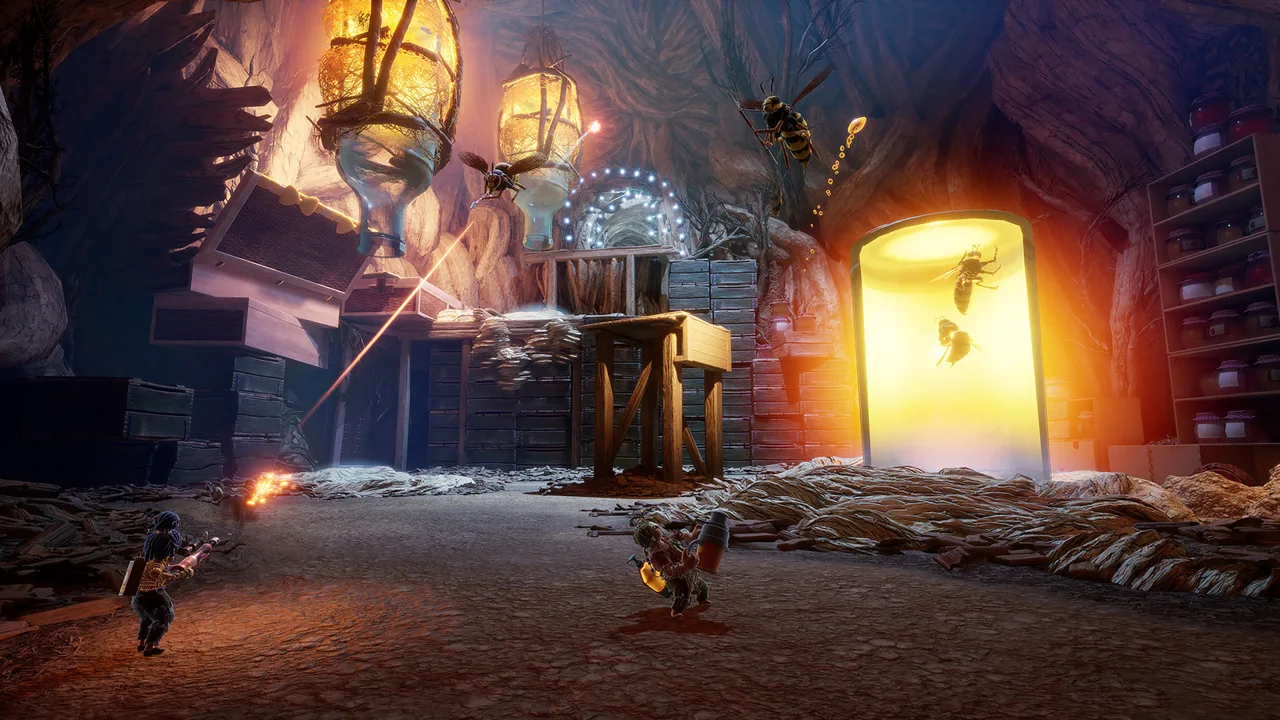
During the conflict between squirrels and wasps, Cody receives a sap gun and May gets a match gun. Cody’s sap can coat targets, and May’s shots ignite it.
That creates a clear cooperative sequence: place the sap, then trigger the reaction. Instead of independently firing at different things, coordinate around a shared target.
Try these habits when using the pair:
- Call out your target. Tell your partner what you are coating before asking for ignition.
- Watch the moving object. Coordinate your aim when a target travels through the scene.
- Look beyond enemies. Sap also adds weight to objects, opening possibilities for environmental puzzles.
- Describe the intended result. Say whether you want an explosion or need an object weighed down.
The weight mechanic deserves particular attention. Shooting sap at something can change its position through added weight, so an obstacle may require Cody’s setup before May’s ignition becomes relevant.
Magic, Swords, and Garden Weapons
Other encounters change the combat style entirely. Cody takes on a wizard role while May uses a large flaming sword in a dungeon-style section. Elsewhere, Cody becomes a cactus that fires needles, and May carries a scythe.
| Weapon or power pairing | Cody’s action | May’s action |
|---|---|---|
| Sap gun and match gun | Coats targets with flammable sap | Ignites the sap |
| Wizard and sword | Throws magic at enemies | Swings a flaming sword |
| Cactus and scythe | Shoots needles while transformed | Attacks with a scythe |
Coordinate around the actions you actually have. With sap and matches, discuss the reaction you want to trigger. With magic and a sword, communicate which enemy each player is attacking.
Cody also receives throwable nails that help with traversal and puzzles. Look at environmental targets as well as the route ahead, and discuss how placing a nail could help your partner cross.
Across these It Takes Two abilities, the useful habit is to connect an action with its purpose. “Shoot this target” gives your partner less information than “coat this object so we can weigh it down.”
Time Control, Cloning, and Magnets Explained
Some of the game’s powers shift attention away from weapons and toward space, timing, and object manipulation. These pairings make communication especially valuable because you and your partner can be solving different parts of the same problem.
Cody’s Time Control
Cody can control time and reverse the state of certain objects. The important detail is the object itself: watch what changes when Cody uses the power.
Before attempting a crossing, discuss which object state your partner needs. Then coordinate the manipulation with their movement. Give clear calls such as “hold that position” or “change it after I move” when those instructions fit the obstacle.
Avoid assuming that time control solves every moving hazard. Focus on the objects Cody can interact with and build your plan around their visible behavior.
May’s Clone
May can create a clone and swap places with it. Her ability introduces another position into the puzzle, giving her a way to change locations through the clone.
Plan the swap around the location you need to reach. Tell Cody where you intend to appear and what should happen before you swap. When his object manipulation and your position both matter, explain the sequence before either player starts moving.
Both Characters’ Magnets
Cody and May each receive a magnet piece. Their magnetic abilities let them push and pull objects and interact magnetically with each other.
| Ability | What it changes | What to discuss |
|---|---|---|
| Cody’s time control | The state of certain objects | Which state the other player needs |
| May’s clone | May’s location through a swap | Where she intends to appear |
| Magnet pieces | The movement of objects or the characters | What should move and in which direction |
With magnets, name the thing you want to move. “Pull me” and “pull the object” describe very different plans.
These It Takes Two abilities reward precise language. Replace “do your thing” with an instruction about position, direction, or timing, and your partner has something concrete to act on.
Transformations, Shared Movement, and Vehicles
Not every memorable mechanic belongs exclusively to Cody or May. Both characters also navigate through jumping, swinging, grinding, swimming, and an assortment of rides.
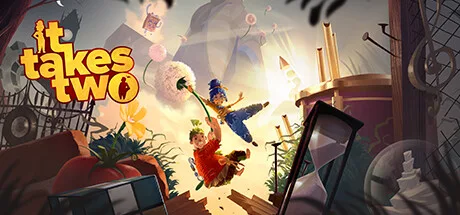 Image: Steam / Hazelight Studios
This matters when learning It Takes Two abilities because movement and special powers often demand different kinds of attention. A traversal section asks you to read the route and manage your movement; an ability puzzle asks you to understand how your tools affect that route.
| Movement or transport | What the characters do |
|---|---|
| Grappling hooks | Swing across spaces |
| Wall jumping | Jump against walls during traversal |
| Grinding | Travel along rails |
| Swimming | Move through underwater sections |
| Bobsledding | Ride through tunnels and curves |
Keep the immediate movement task clear. Call out the next grapple point or rail, then let your partner focus on reaching it. When swimming, discuss the direction you are traveling before separating your attention between the environment and your partner’s screen.
The adventure also includes boats, rockets, fidget spinners, and animal rides. A wooden boat carries a cannon used to destroy obstacles. Other sequences put Cody and May on frogs, spiders, and a beetle, changing how they travel through the world.
Treat each vehicle as its own control challenge. Before rushing ahead, identify what you can steer, what you can interact with, and what your partner is doing alongside you. On a boat with a cannon, for example, discuss the obstacle you intend to clear.
Cody’s transformations add another layer of variety. His cactus form gives him a needle attack, while other shape-changing moments appear in the toy-like space setting.
Describe the action currently available instead of relying on a character’s earlier role. Cody’s responsibility can change substantially between a sap-gun encounter, a time puzzle, and a transformation sequence.
How to Coordinate Your Abilities in Co-Op
Understanding individual powers is only part of using them effectively. The other part is sharing enough information for your partner to connect their action with yours.
Explain the Effect Before the Input
Start with what needs to happen in the world. Say “we need this object lower” before discussing how to move it. That gives both players a common goal and makes the relevant tool easier to identify.
For sap puzzles, distinguish between adding weight and preparing an explosion. For magnetic challenges, distinguish between moving an object and moving a character.
Separate Setup From Execution
Many cooperative actions become easier to discuss when you divide them into preparation and movement:
- Identify the target or destination.
- Explain what each ability will change.
- Agree on the order of actions.
- Call out when to begin.
Use this as a communication checklist rather than a fixed puzzle solution. A sap-and-match interaction has different demands from a clone swap, even though both benefit from an agreed sequence.
Use Both Sides of the Split Screen
The split-screen presentation lets you see your partner’s situation alongside your own. Glance over when an instruction is unclear, especially when you are manipulating something that affects their route.
Describe visible landmarks instead of saying “over there.” Name the object you are coating, the place you want May to reach, or the direction of a magnetic movement.
Match Your Calls to the Current Tools
Keep your language specific as the mechanics change:
- Sap and matches: identify the coated target.
- Time control: describe the object state you need.
- Cloning: name the intended swap location.
- Magnets: specify the target and direction.
- Traversal: call out the next movement destination.
The changing It Takes Two abilities give both players something new to learn. Give your partner room to understand their tool, then work out the interaction together.
FAQ
Do Cody and May have different It Takes Two abilities?
Yes. Many sections give them different but connected powers. Cody uses sap while May ignites it, and Cody’s time control is paired with May’s cloning ability. Other mechanics, including grappling and grinding, are shared.
Who controls time, Cody or May?
Cody controls time and can reverse the state of certain objects. May receives the complementary ability to create a clone and swap places with it.
How do the sap gun and match gun work together?
Cody coats a target with sap, and May ignites it with her match gun. Sap can also weigh objects down, making Cody’s weapon useful for environmental puzzles as well as combat.
Can you use these abilities in local and online co-op?
Yes. It Takes Two supports couch co-op and online co-op with split-screen play. Friend’s Pass lets a friend join the full adventure when you own the game, with the required installation and platform accounts. Online partners must use the same platform.
Continue with
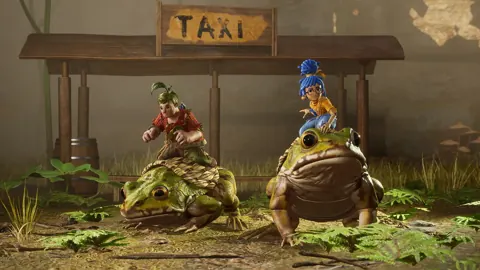 It Takes Two Cody: Character, Abilities & Co-Op GuideExplore It Takes Two Cody, his clay doll form, personality, voice actor, and chapter abilities. Learn how to coordinate with May through co-op challenges.
More in Characters
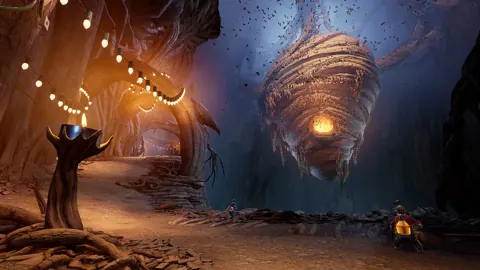
It Takes Two May: Her Story, Abilities, and Co-Op Tips
Explore It Takes Two May, from her wooden doll form and voice actor to chapter abilities, puzzle strategies, and teamwork tips for an adventure with Cody.
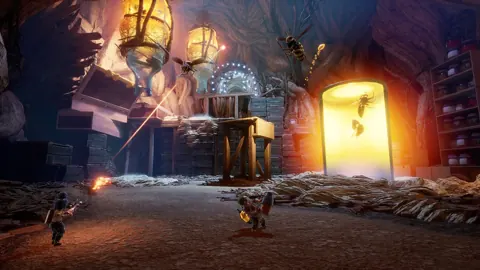
It Takes Two Voice Actors: Meet the Cast and Characters
Meet the It Takes Two voice actors behind Cody, May, Rose, and Dr. Hakim. Explore the English cast, supporting characters, and familiar voices in the game.
Continue exploring
It Takes Two Bosses: Fight Strategies and Co-Op Tips
Beat It Takes Two bosses with clear co-op strategies for Vacuum, Toolbox, Wasp Queen, Moon Baboon, and Joy. Learn attack counters and each player's role.
It Takes Two Queen Wasp: Boss Fight Guide and Tips
Beat the It Takes Two queen wasp with coordinated sap attacks, smart rail movement, and clear counters for every phase. Learn how to break the final chain.
Join the community
Official channels for news, updates and player help: